
O, Canada
Week 68 - the race to leave the US was a success, and Spoke Yokes find a safe-ish haven amongst the confusing place names of Ontario

The record for cycling from London to Paris is held by English time trial cyclist Jonathan Parker.
In 2016, he covered the 273km of land separating the English and French capitals in 12 hours and 31 minutes, with a five hour ferry crossing included in that time.
We were set to half Jonathan’s time. But there was no English Channel to cross and we were covering just 86km, at a pace Jonathan would consider a crawl.
We were cycling from London, Ontario to Paris, Ontario.
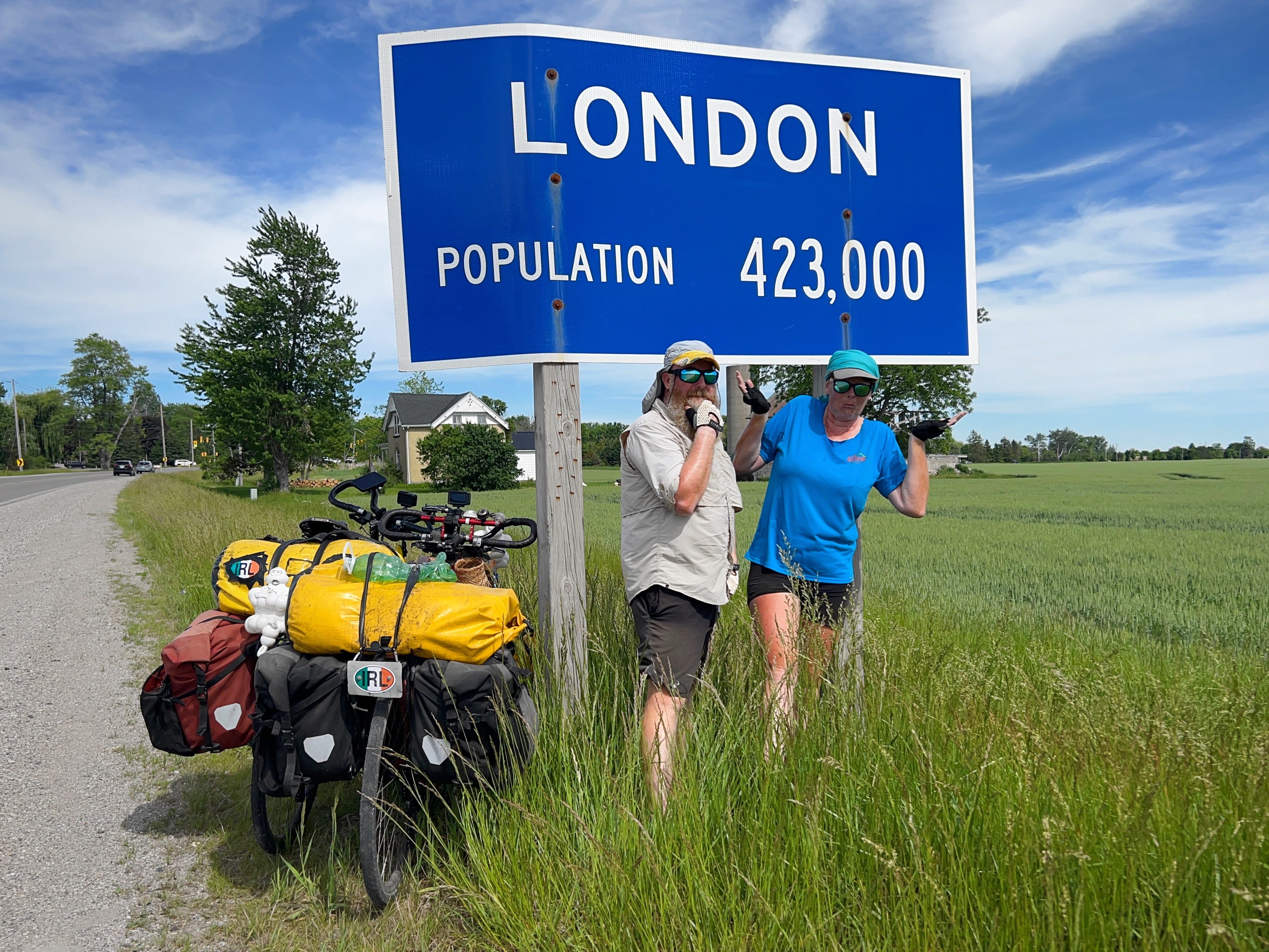
What does it tell us about a place if everywhere there is named for somewhere else?
“Canada has an identity problem,” our Warmshowers host Roger had told us at his home in Windsor, Ontario, right across the border from Detroit.
As we cycled alongside the Thames into the town of London a couple of days after leaving Windsor, it occurred to me that Roger was on the money.
The other person who was most unwelcomely on the money was the erstwhile Queen of England, who still graces the $20 notes. If there’s anything I can’t warm to about Canada it’s the whole Commonwealth thing. Why, why, why?!
Maybe it’s something to do with the selfsame identity crisis that sees Canada name its towns after other places.
We had cycled through Chatham, Glencoe, Tilbury, and even Kilworth - there’s a Kilworth in North Cork which used to be on my beat for an extremely local newspaper - to get to London, and from London, it was going to take us just a matter of hours to get to Paris the following day.
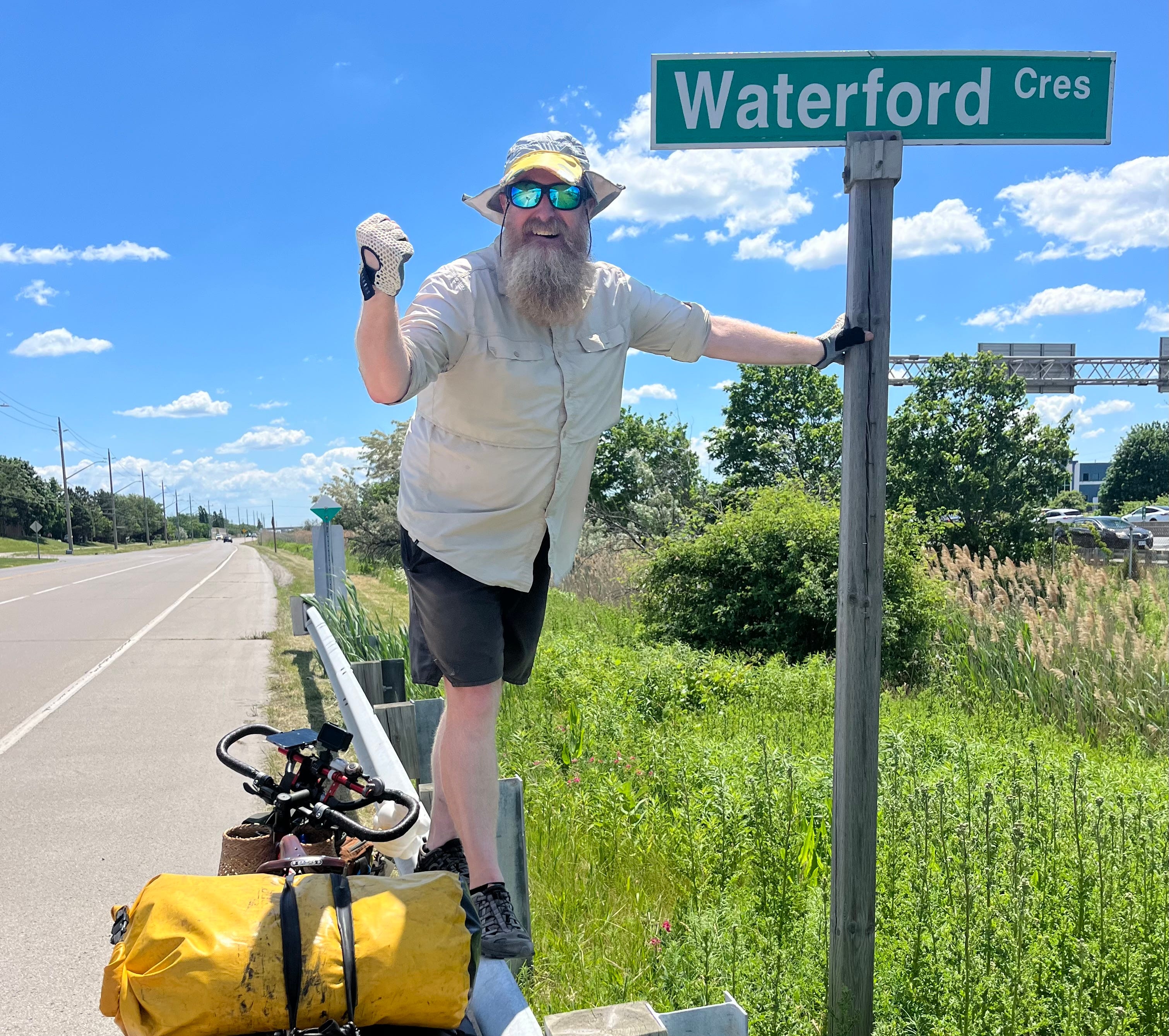
Mark was extremely delighted to find a Waterford during our time in Ontario too. Although, arguably he himself was a much more authentic little dose of Waterford in Canada than any street sign.
Kay Dawson certainly seemed to think so.
Kay never stopped missing Ireland
We had re-entered Canada at Windsor with great relief, because we were on the 87th day of our US visa waiver period. We stayed with the aforementioned Roger and his extremely lovely wife Georgina.
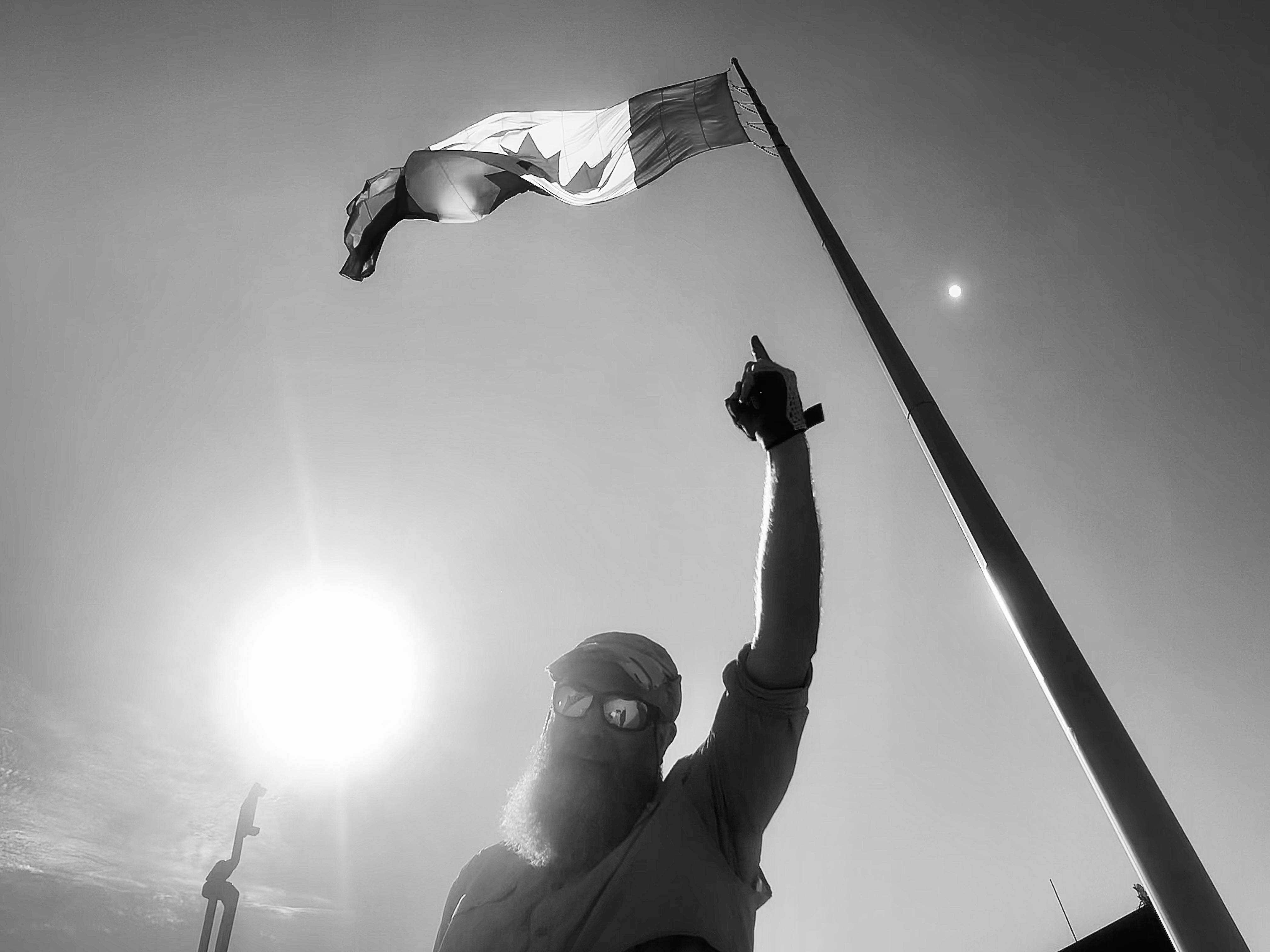
Leaving the next morning, we took a little tour along the waterfront with Roger to admire the Detroit skyline across the water, and then we high-tailed it to an assisted living retirement home in the outskirts of town for something we were very much looking forward to.
We were going visiting with Kay, who was born Catherine Power in the village of Kilmacthomas, left Ireland at the age of 17, brought her family up in Canada, and who has been missing Ireland ever since she left 64 years ago.
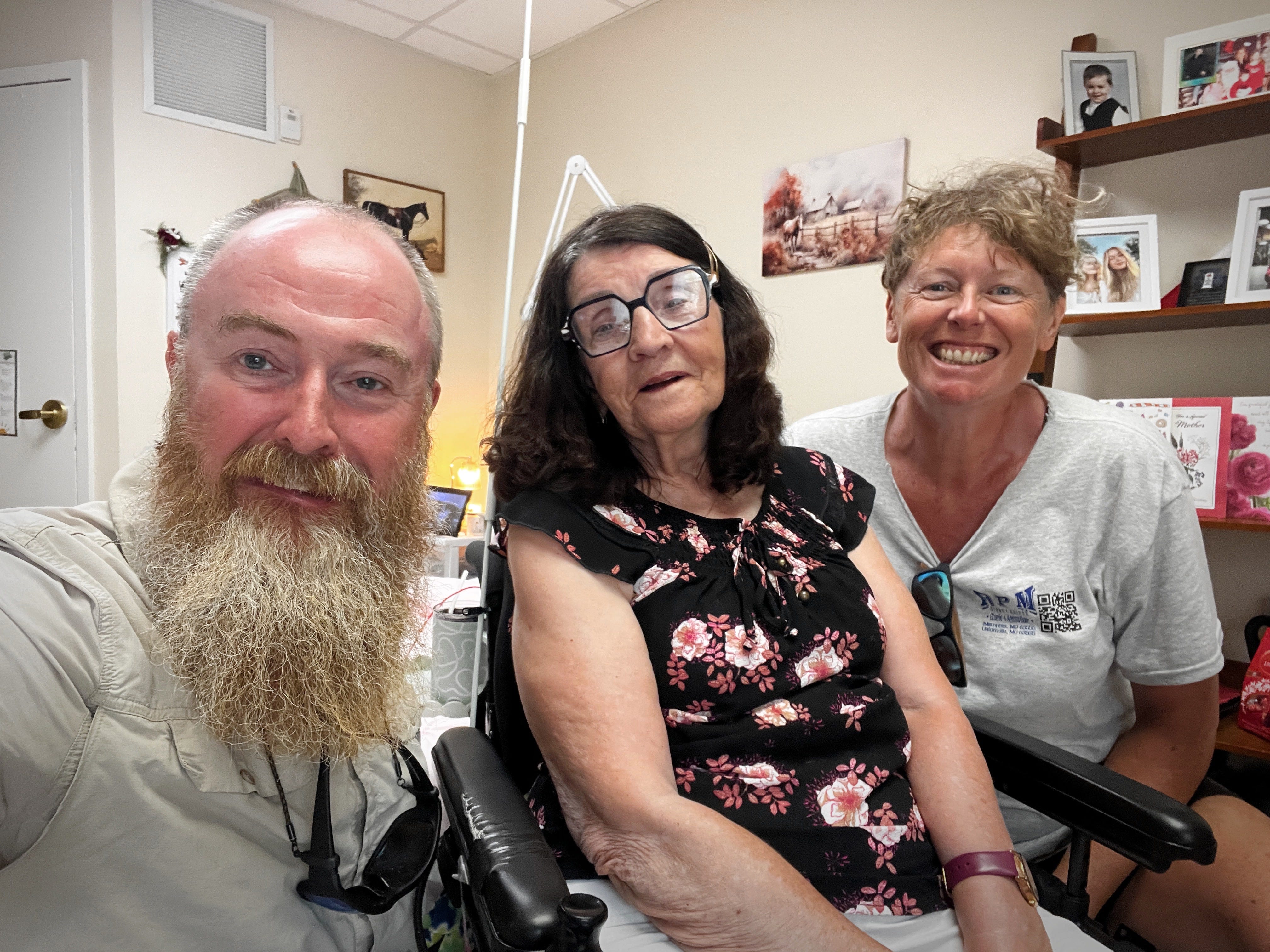
She greeted us like long-lost relatives, which, for complicated Irish-family-reasons, we nearly are. We spent a lovely couple of hours chatting, and hearing about her life both as a girl in Ireland and after moving first to England and then, after marrying a man from Northern Ireland, to Canada.
There’s a poignancy to the memories of lifelong emigrants, because time and place so easily become entangled; some of the people Kay remembers from Kilmac are probably no longer of this world. The Ireland she remembers is long gone. She can’t visit the Kilmac she left, not without a time machine on top of an aeroplane ticket.
Kay has a soft spot for cowboys and country music. We played and sang a couple of songs together and the one she enjoyed the most was Mark’s rendition of Mammas don’t let your babies grow up to be cowboys.
Kay is an extremely intelligent and humorous person who has borne her fair share of earthly troubles with grace.
We bid her a fond farewell and hit the road, into an immediately strong headwind that we battled through to the town of Wheatley, on the shores of Lake Erie.
We pitched tent in a campsite that came with showers, but the showers were home to record-breaking quantity of mosquitoes, who seemed to be emerging from the drains inside the shower cubicles.
Then we hit on what we thought was a bright idea: a dip in Lake Erie instead of braving the mosquito-infested shower facilities.
An Erie feeling
At home in Ireland, we swim once a week or more, all year round.
About seven years ago I was looking for a good New Year’s resolution, and I decided I’d commit to swimming at least once per month for the entire year to come. Mark, always game for some nonsense, decided he would do it too.
I used to surf in my twenties. I knew there was something about those winter immersions that did me good. But that had been in a wetsuit.
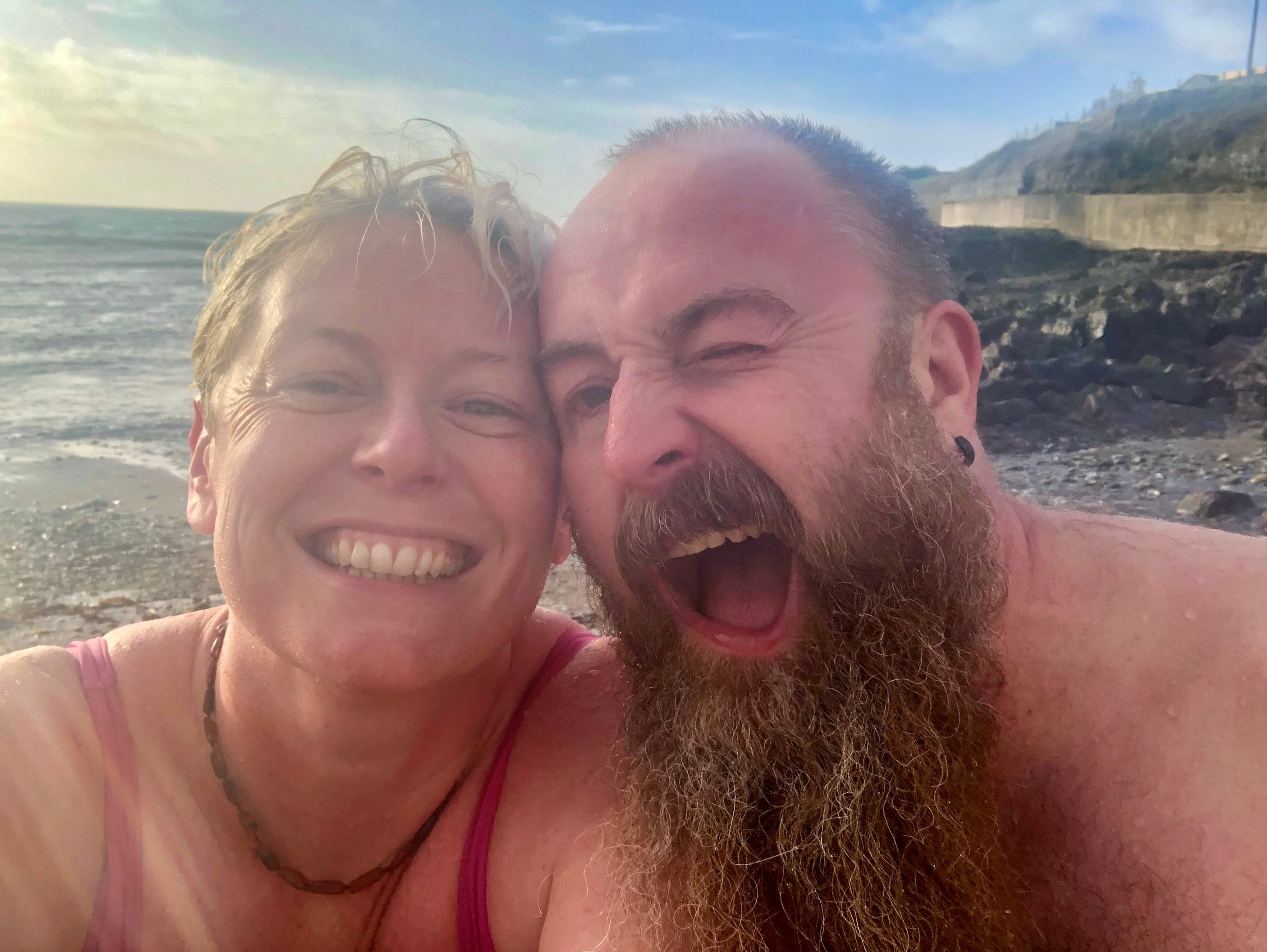
The first February dip after our New Year’s resolution was an awful shock, and March wasn’t much better.
But soon I started feeling the benefits of the cold water immersion, and the following year, we upped our swims to one per week, and in the following years, we started trying to extend our time in the water as long as possible.
Anyone who isn’t a fan of cold water swimming is not going to be convinced of its physical and mental health benefits in the course of this rambling collection of thoughts, so you’ll just have to trust me when I say that there’s never been a stress, worry or negative feeling that hasn’t been improved by immersion in the Atlantic.
It’s probably fair to say that when we embarked on this journey, we were naively anticipating far more swims than we’ve had.
We took a chilly dip in the English Channel in Normandy on February 3, 2025.
We braved the Black Sea in Bulgaria, and a couple of times in Turkey but the beaches on the Black Sea coast were often segregated by sex and the total lack of female swimmers put me off.
Epic swims during our Turkish holiday with family on the Mediterranean coast would be our last for a long time.
All throughout Central Asia and China we eagerly anticipated our first glimpse of the South China Sea, but when we got there, just before the Dong Xing border with Vietnam, we found it so heavily polluted that we didn’t brave a dip.
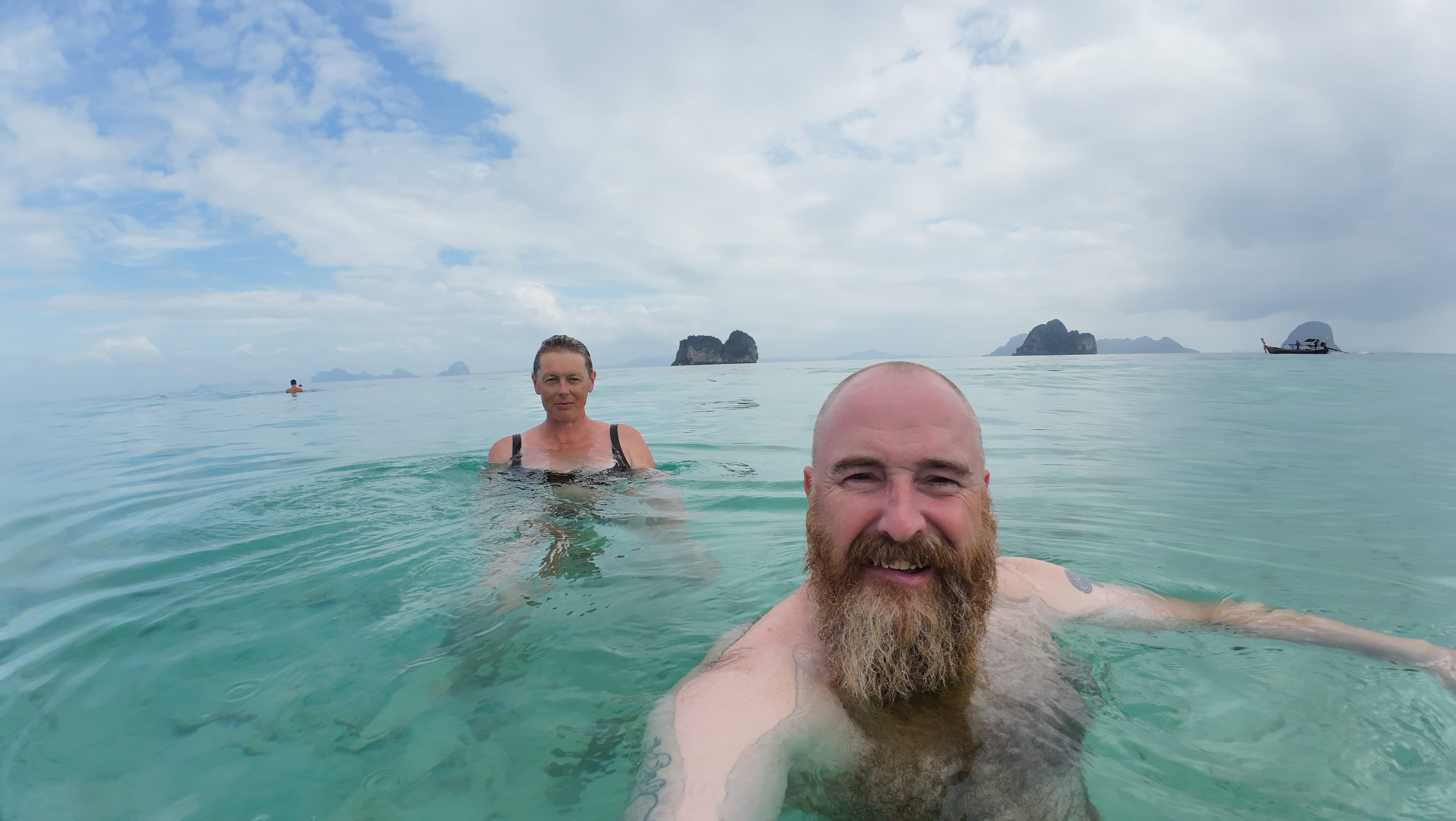
Vietnam and Thailand brought many swims but we were warned against swimming in the heavily industrialised Straits of Malacca in Malaysia.
On Pender Island off Vancouver, we took a couple of very cold but sparkling clean March dips in the Salish sea.
All these things were in my mind as we eagerly approached the shore of Lake Erie through our campsite. The sun was setting over the fourth largest of the Great Lakes as we walked down its sandy beach.
I had read that it’s the shallowest of the Great Lakes and so I anticipated that its waters would be warm. They were not.
They were icy cold, and as we waded into the murky water a layer of fine black silt rose around our feet. We splashed around, and I submerged myself only to the extent I needed to wash.
Lake Erie cold seemed dead cold, and I was shivering when we got out and quickly dried ourselves. Have I managed to de-acclimatise myself to cold water?!
All this cycling around the world must be making me soft.
Roadhogs
Throughout this world cycle, it has been fantastically refreshing to have pre-held notions upended all over the globe.
Often, any preconceived ideas we have about a place come from the reported experiences of others, and anyone who thinks this is a reasonable source should spend more time on Google reviews, or on any open forum relating to cycling.
Especially when it comes to people’s cycling preferences and experiences, the online world is extremely unreliable.
So you may be surprised when I tell you that, although we found drivers in the US by and large excellent, with only a minority of rude or dangerous behaviour, Ontario, in polite ol’ Canada, is now fifth on my list of shitty places to cycle from the point of view of driver behaviour.
The list, in descending levels of shitness with number one being top prize, now goes like this:
Georgia, especially Tbilisi
Uzbekistan
Romania
Kyrgyzstan
Ontario
All five places on this list combine extreme close passing and other dangerous behaviours (overtaking at junctions and into oncoming traffic, for example) with aggression towards users of slower vehicles. Most also combine poor road surface with dangerous driving, meaning that while you cycle you often have to choose the pothole over being clipped by cars going too close.
In Ontario, most minor roads, presumably for reasons of cost in such a huge province, have a deep gravel shoulder that isn’t possible to cycle on. But many drivers seem to believe that you should be cycling on it, and want to punish you by passing extremely close and at very high speed, often giving their engine an extra-aggressive rev as they pass.
Because the distances are so large and so unpoliced, almost no-one on the long backroads is sticking to the speed limit. So you hear a car bombing towards you, and then they pass you with a foot to spare, despite the road being completely straight and flat and with no oncoming traffic so plenty of room to overtake correctly. Repeat this maybe 20 times per hour.
I’m afraid a few days of this really got in on me and damaged my ability to enjoy cycling in Ontario. Not the people, the towns, the sights….just the cycling. It became a nerve-jangling chore to get on the bike and brave the roads.
So by the time we reached a coffee shop in Burlington to meet Martin Lancaster, I was delighted to be on the verge of a multi-day break from cycling.
The pinball wizard
When we got a message from Martin on Instagram, we knew we were going to be in need of a proper break somewhere near Toronto after our mad dash from St Louis up to Canada.
Instagram’s algorithm had somehow managed to insinuate us into Martin’s feed: this wasn’t a Warmshowers host or an Irish connection, but a stranger who had offered to put us up based on Meta’s bizarre assumption that people who like cycling will be interested in Spoke Yokes, even though we most frequently post about crisps, rude place names and small animals that we meet.
Martin and his wife Claire are from England but have lived in Oakville Ontario, just 30km outside Toronto, for 14 years. Now empty-nesters, they are on the verge of a permanent move back to the UK.
In the midst of some delays due to the logistics of this move, they were inhabiting a short but strange period of limbo, during which we like to think we provided a little light entertainment.
They have a special interest in Ireland at the moment because one of their daughters has taken up a job in Dublin so they’re anticipating many more visits.
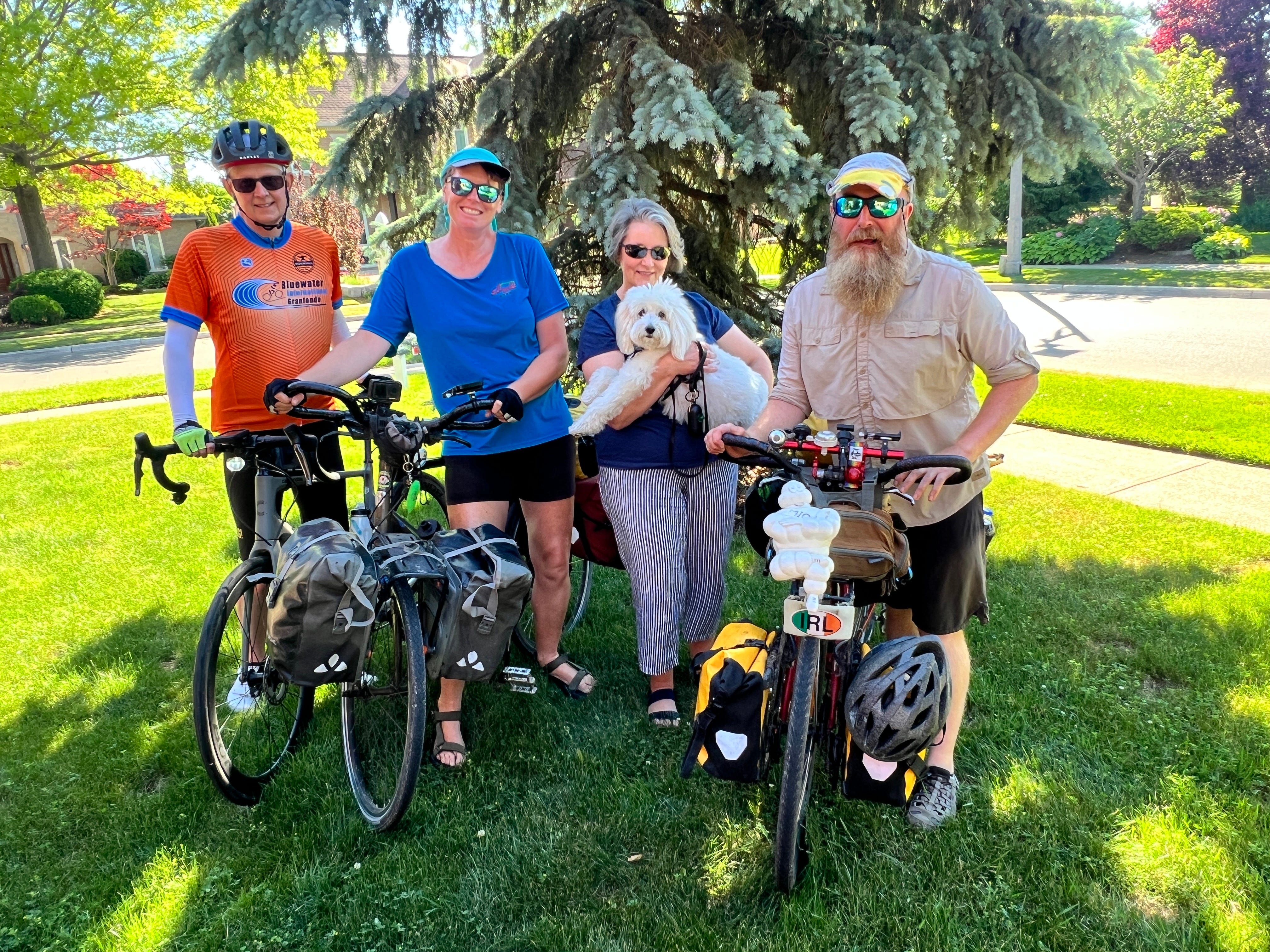
Staying with Martin and Claire was an extremely happy time. We drank a lot of tea, swapped stories, and laughed ourselves silly, especially on our last night when we discovered that wine-fuelled pinball is hilarious.
We were extremely moved by the amazingly thoughtful little things Martin and Claire had done to make our three day stay pleasant. There were packets of Tayto. There was Barry’s tea.
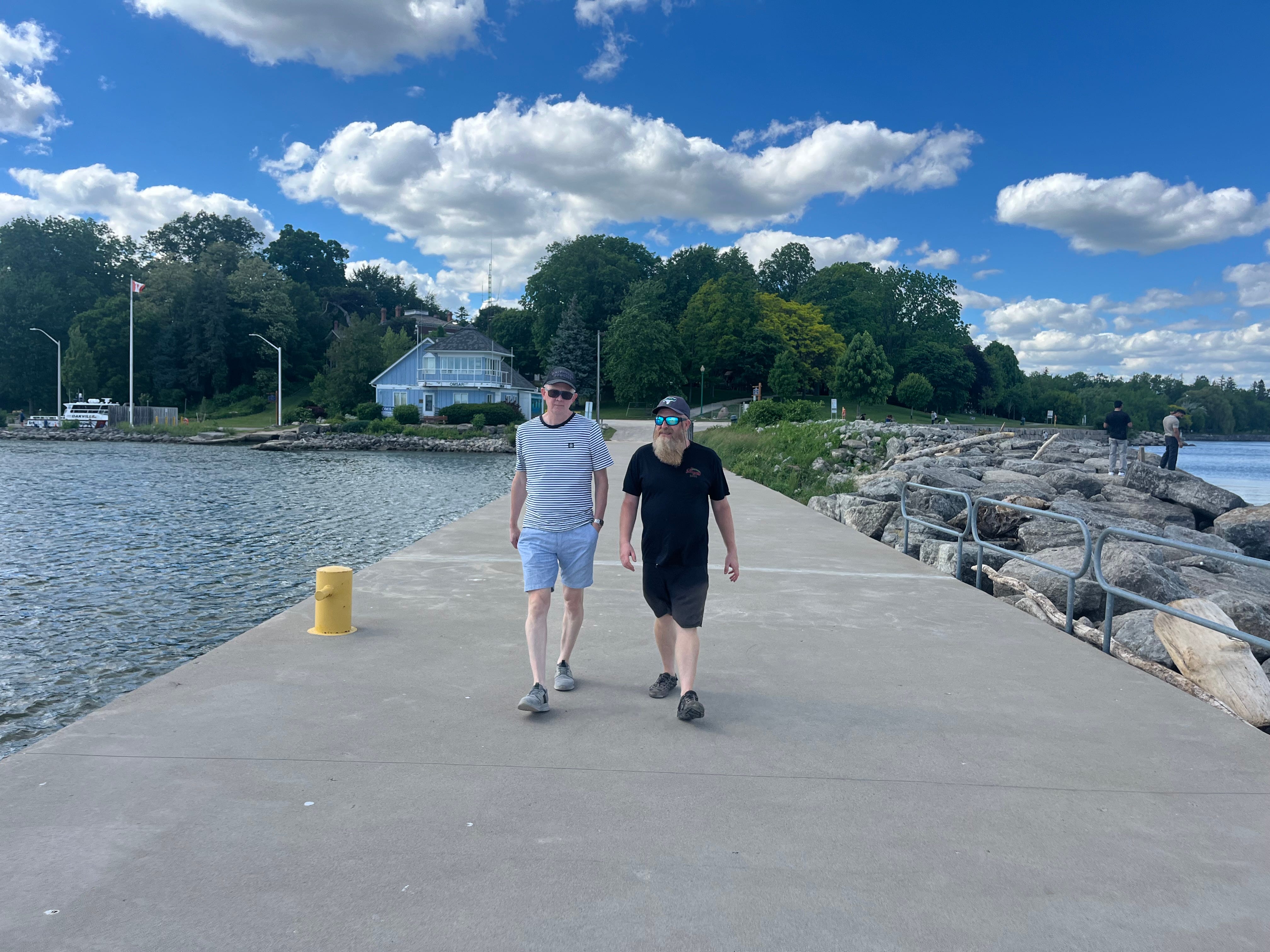
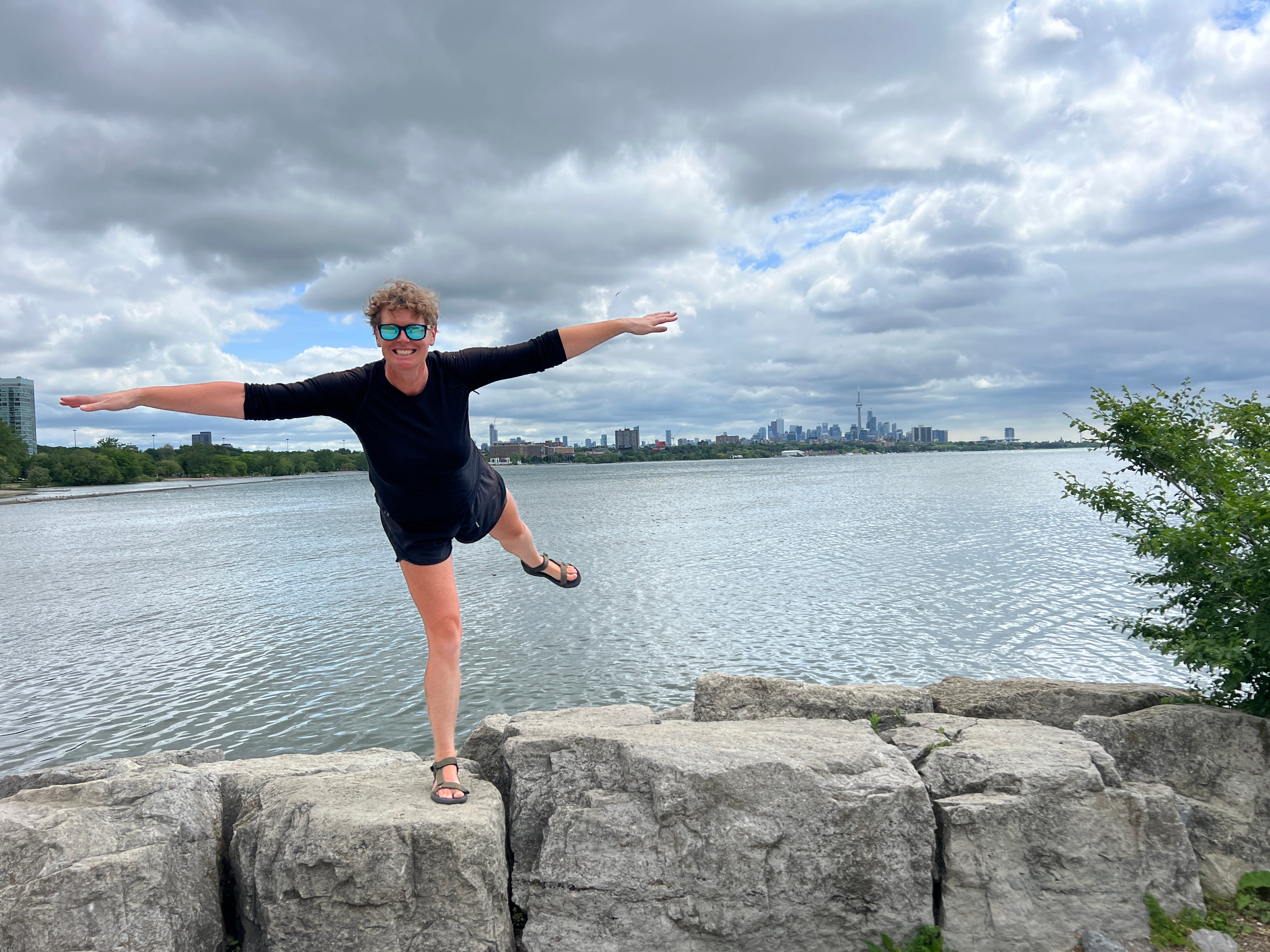
They took us for a lakeside walk with views of Toronto, and around their neighbourhood in Oakville, and we had some delicious dinners and it was a very welcome break.
Their beautiful house even had a swimming pool: after the greasy chill of Lake Erie, a clean swimming pool in a lovely back garden populated by feisty squirrels and birds like something from a Disney cartoon was an incredible luxury.
Niagara Falls
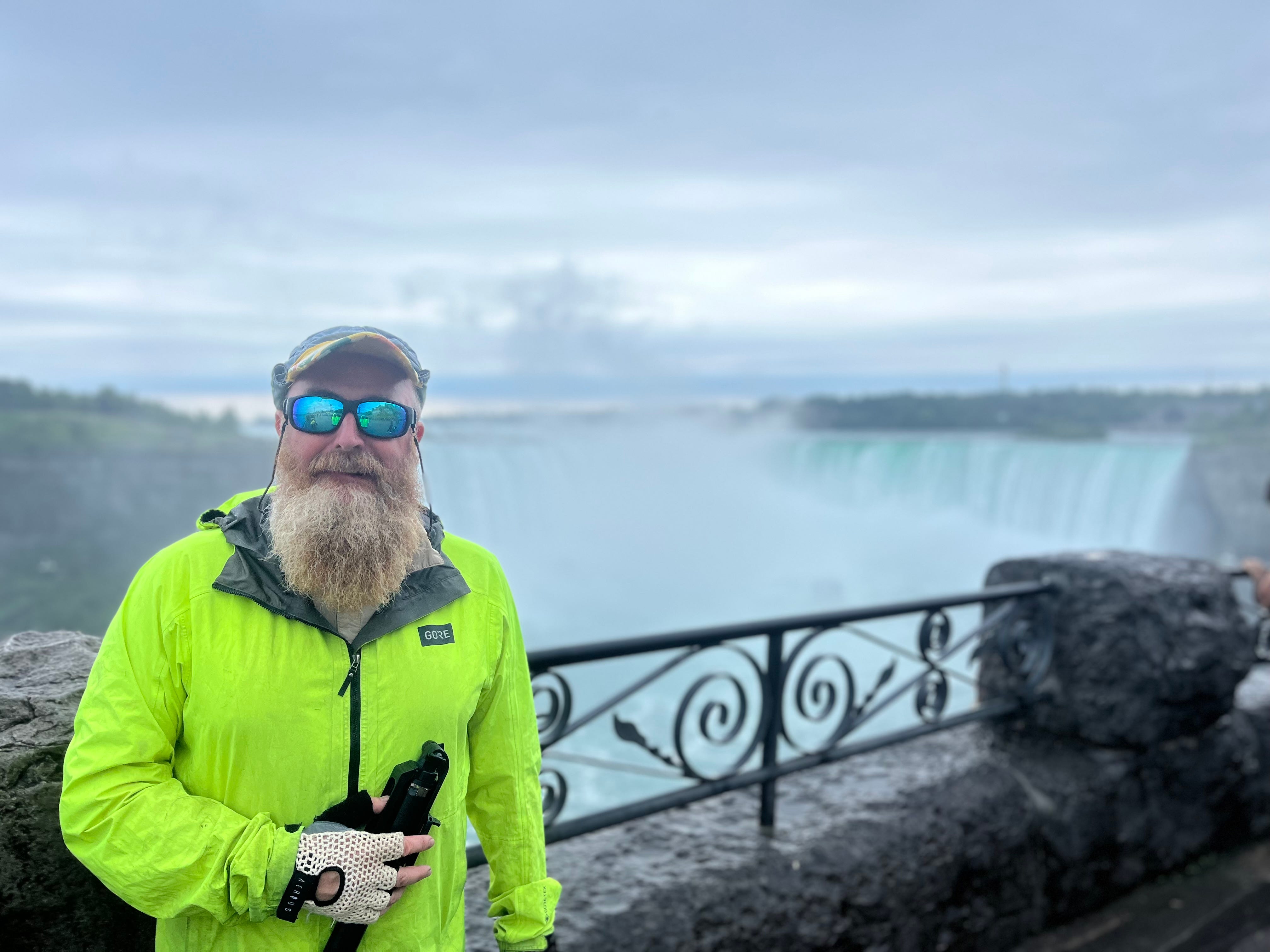
Reluctantly taking our leave of Oakville, we had Martin as our companion for the first 20km as we skirted Lake Ontario past Hamilton, a town so industrialised that Martin and Claire’s daughters called it Mordor, and then on our way to Welland, a lovely canalside town and a perfect stopover before hitting one of the most famous landmarks of our entire journey.
We were headed to Niagara Falls, hoping to cross the border back into the USA in Upstate New York.
We’re not the best for famous landmarks. To be honest, I’m not really sure what you learn about a country by seeing The Thing and going away again.
Granted, The Thing - the Eiffel Tower, Mount Fuji, the Taj Mahal - is normally spectacular and impressive. But The Thing is normally photographed from every available angle, and surrounded by tourist-priced snacks and conveniences, and people whose curiosity about others has long since been replaced by a predictable desire to extract cash from strangers.
We often joke that we see more waste water treatment plants and industrial estates than we see of the “sights,” and normally this is how I want it to be.
But damn, is Niagara Falls spectacular.
Six million cubic feet of water - 68 Olympic swimming pools’ worth - plunges from the top of the falls every minute, reaching top speeds of over 100km per hour in the rapids right above the drop.
The roar this produces is nearly enough to drown out the casinos, icecream salesmen and tour guides at the top. The awe is thrilling and it’s not abated just because there are so many other people there too.
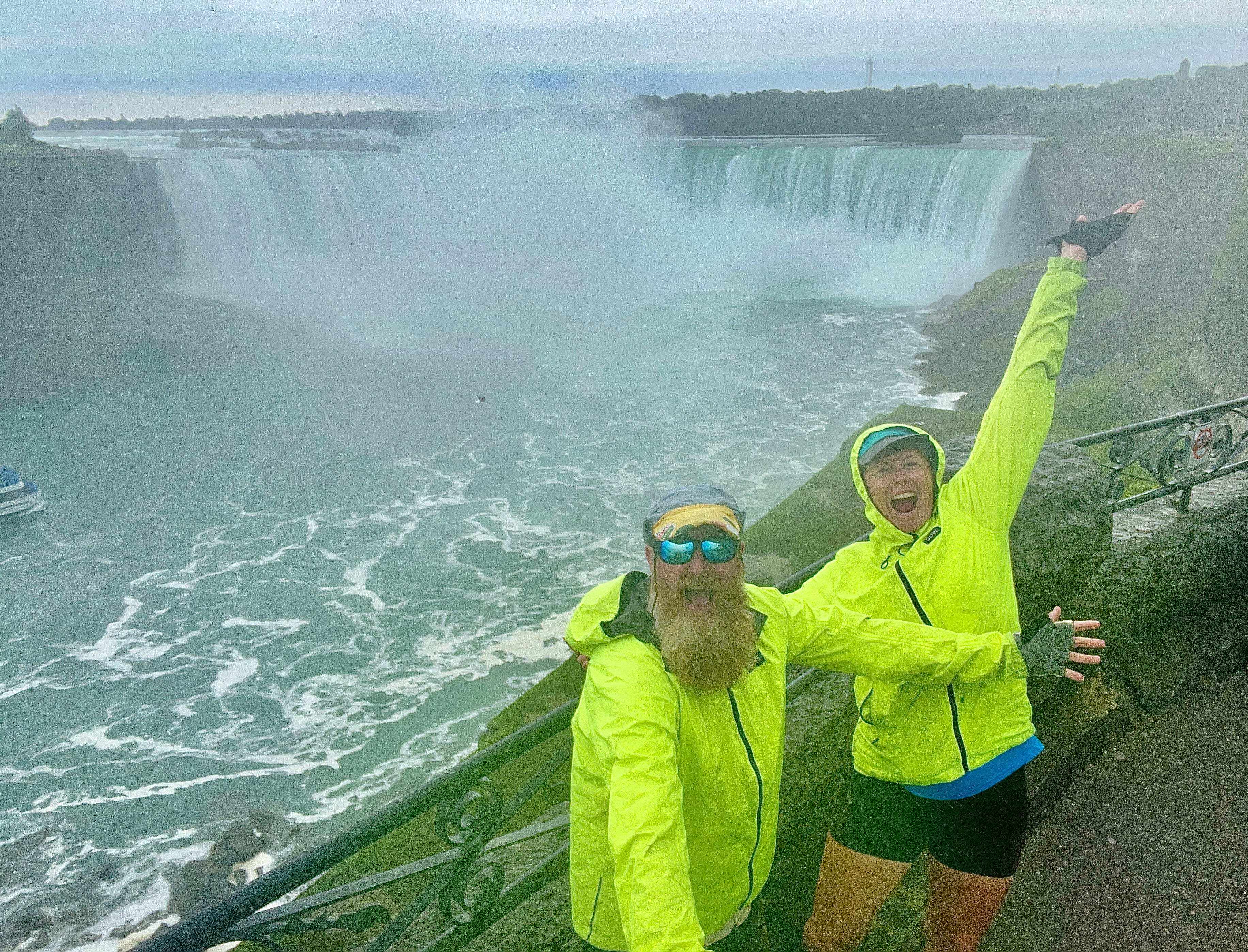
In fact, for once I got seized by the desire to do a genuine tourist activity when I saw the boats laden with merrily screaming plastic-poncho-clad visitors bob crazily towards the base of the Horseshoe Falls like toys in a particularly violent toddler’s bath.
The vessels crept ever closer to the sheet of roaring water.
What crazy naked apes we are, I thought to myself. Give us a force of nature and we are inexorably drawn to its power and eventually, we’ll all be bobbing around as close to the chaos as possible and eventually, one of us will get into a barrel and roll ourselves off.
Just to see if we can survive what nature will throw at us.
Pathetic fallacy and an even more pathetic cliffhanger
Have you heard of pathetic fallacy? It’s a dramatic literary device that Shakespeare was fond of, where natural phenomena - storms, waves, clouds - match the emotions of human characters.
“Tis bitter cold, and I am sick at heart,” one guard says to another in the opening lines of Hamlet, mirroring the weather against his own inner state and indeed against that of all of Denmark.
Wailing winds, furious storms, and beams of happy sunshine: it seems humans can’t help but to anthropomorphise and project, to find meaning in the random and to find reflections of ourselves everywhere we go.
It had been drizzling when we arrived at the Ontario side of Niagara Falls.
As we wended our way to the border crossing into the US, a tumult of black clouds began heaping themselves above our heads. A big storm was coming in fast.
We had no idea if we would be permitted re-entry to the States. We had a two-year ESTA on our passports and these technically allow for multiple 90-day re-entries, but they’re completely at the discretion of the border guards.
The dark clouds of uncertainty, then, loomed above us as we made our way onto the bridge separating Canada from the US.
As borders go, this was the most spectacular of our trip so far: standing on the bridge, we could see the majestic falls to our right as we waited in a queue of traffic for the border.
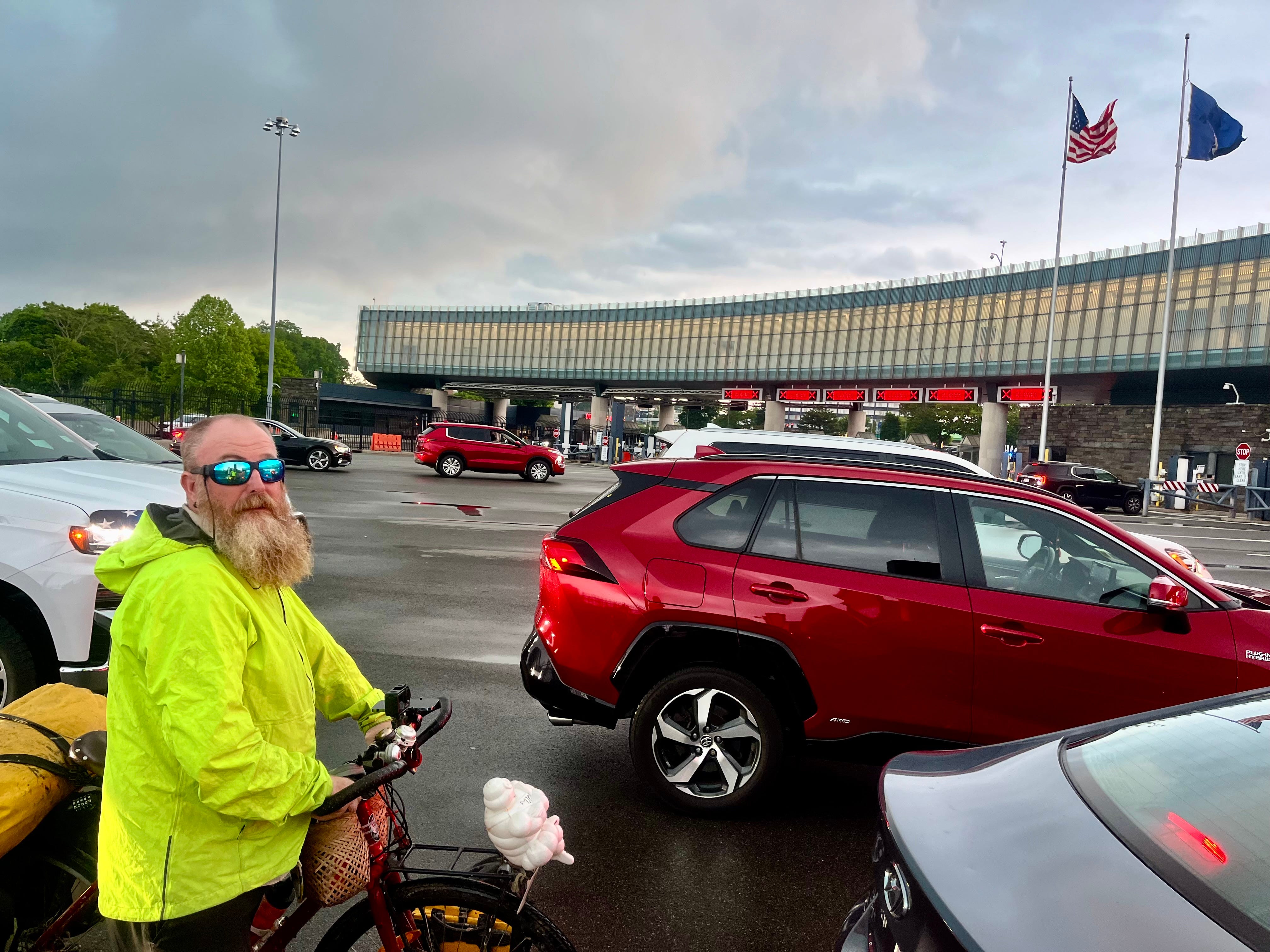
As the sky darkened, there was a distant flash of lightning followed quickly by booming thunder. Stuck out in the middle of the bridge, we pulled our hoods up surveyed the sky uneasily.
What did this weather portend? Would we be allowed back into the US?

Quebec is a wonderful province to cycle. Check out “ La route Vert” network of cycle routes and paths. https://www.routeverte.com/en/ I think there are 5000km of Vert routes including to the eastern coast. Also do not miss Quebec City. A few days in the old city are well worth it.
Great build up to a cliff hanger ending.
Loving your accounts of your encounters and observations. I’ll be missing you when you get home to Ireland.